
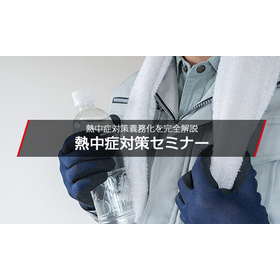
This summer is dangerous. With extreme heat days and legal reforms, what responses are required in manufacturing sites?
This summer, "as usual" will not apply.
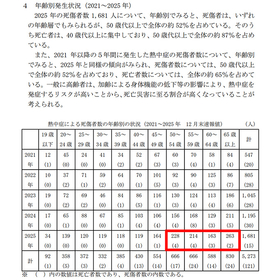
The Japan Meteorological Agency has newly categorized days with a maximum temperature of 40 degrees Celsius or higher as "extreme heat days," in addition to "heat wave days" with temperatures above 35 degrees Celsius, sounding a strong alarm as the reality of disaster-level heat becomes a tangible risk. Furthermore, due to the revised Occupational Safety and Health Regulations enacted in June last year and the revised Occupational Safety and Health Act that came into effect in April this year by the Ministry of Health, Labour and Welfare, workplace measures against heatstroke are now shifting from "awareness" to "specific management." In particular, consideration for older workers is highlighted as a key point of focus. ▼ Heatstroke in older workers is "prone to become severe" - Diminished sensitivity to heat and thirst - Reduced sweating and body temperature regulation functions - Slower recovery due to pre-existing conditions or medication effects With the overlap of extreme heat days, legal revisions, and older workers, postponing measures against heatstroke now poses a "management risk" that could lead to work-related accidents, corrective guidance, or operational shutdowns. Therefore, we have launched a website that explains the interpretation of the regulations and the necessary responses while analyzing materials from the Ministry of Health, Labour and Welfare! Waiting until summer is in full swing may leave little time for adequate responses. Now, when "nothing has happened," is the perfect time for a review.
- Company:新東工業
- Price:Other


![[Information] "Choosing a Casting Machine Without Fail" That Manufacturers Won't Tell You](https://image.mono.ipros.com/public/product/image/8b2/2000772485/IPROS40799228033327729187.png?w=280&h=280)
![[Case Study] Production Equipment Manufacturer Company P](https://image.mono.ipros.com/public/product/image/28c/2000775400/IPROS48802494102186123591.png?w=280&h=280)
![[Case Study] Metal Surface Treatment Manufacturer Company S](https://image.mono.ipros.com/public/product/image/609/2000778099/IPROS18856803431318610931.png?w=280&h=280)


